The origins of Cypria

THE USONIAN: What inspired you to write Cypria?

ALEX CHRISTOFI: I always knew I wanted to write about a book about Cyprus. For a long time, I assumed it would be a novel. I started out writing fiction, and I imagined this amazing star-crossed lovers plot set around the 1974 invasion, which would help bring general readers into understanding the complicated politics of the island. But the longer I thought about it, the less realistic it seemed. Some of the stuff I wanted to write about wouldn’t fit within the scope of a novel.

And then I read The Island of Missing Treeby Elif Shafak [which also centers on a forbidden romance between Greek and Turkish Cypriot characters]. [At that point I realized] that [plot had] been done really well, and the idea didn’t need me anymore. It freed me to write a book that didn’t already exist—to write the whole history of the island in a single volume in the English language, and try to bring everything in, from when humans first arrived to the present day.

TU: Cypria is a beautifully told work that compresses thousands of years of history into a manageable text. Before I read the book, I knew a lot about Cyprus, but there were so many stories in this book that were new to me—like how the Crusaders invented the sugar plantation system that eventually was forcefully imposed on the Americas, or how Luigi Cesnola’s problematic excavations actually launched New York’s Metropolitan Museum of Art. How did you conceive of the structural prism to hold all these stories?

AC: When moving through places [in Cyprus], you move through time. One of the places where this is stark is in Nicosia. At the end of Ledra Street, there’s a checkpoint. And you if you do cross over there, you end up going through this Buffer Zone that’s been basically preserved since 1974—it’s the same with the ghost town of Varosha. So there are all these little places that seem to embody a particular moment in history. There’s a great tradition of travel writing about Cyprus, and I really liked the idea of writing a book that kind of traveled through space and time all at once. It’s a historical tour of the island. That was the only way I could find a real vessel that would allow me to say everything I wanted.

Rather than accepting the world’s narrative—which is that Cyprus is a footnote to world history—I tried to make the argument up front that it’s a pivot point for the world—what Greeks would call the omphalos, the navel of the world. The ancient Greeks thought that was Delphi, but I would argue it was Cyprus, which was this amazing nexus of Eurasian empires. It becomes the story of the world through a grain of sand.

TU: You also start at the very beginning—a prehistoric time of ancient elephants, which, in your telling, inspired the legend of the Cyclopes, and indeed, the name of Cyclopes’ cave in Ayia Napa. Tell me about your interest in the deep history of the island.

AC: I actually found the early history way more interesting than I expected to, so it took up more of the book than I had planned. Part of that story involved the Bronze Age kingdom of Alashiya, which was clearly a really important regional power. The king of Alashiya would address the pharaoh of Egypt as a brother, and the ruler of Ugarit [a city-state in Syria] would address the King of Alashiya as Father. And it seems to have been the biggest copper trader in the world at the time. So it felt important to ground the story in this sense that Cyprus was vital to the emergence of Mediterranean culture.

TU: As you mentioned, there’s a long tradition of travel writers who have written about Cyprus. Your book, however, is from a Cypriot perspective. As a writer, what were you trying to do that Lawrence Durrell or Colin Thubron couldn’t in their milestone travel narratives, Bitter Lemons and Journey into Cyprus, respectively?

AC: I did like the idea of drawing on that tradition. The Durrell and Thubron books are really amazing, particularly the Thubron—he traveled across Cyprus in 1973, so it became this historical document of the last year that the island was undivided. I liked the idea that my book could be a faithful account of the island as it stood in 2022-23.

My heritage is both British and Cypriot, but I don’t think there have been very many books about Cyprus written for an English-language audience, from what academics might call the Cypro-centric perspective.

I do think that colored the way that the way that the [Durrell and Thubron] accounts were written. The modern genre of travel writing began with Mark Twain; rather than setting out to write an uncomplicated account, Twain sent up the conventions of travel—wherever the travelers get dragged, they are super bored, even though they’re looking at a Da Vinci or something—they just want to have dinner or get back on the boat. Some of the narrative irony of that genre got lost over time. And sometimes writers had a tendency to caricature locals as a way of providing light entertainment, which is not the most modern approach.

TU: One thing I loved about the book is that you really spend a lot of time unpacking the history of the cuisine—like commandaria, or halloumi. There’s a lot of interesting stuff that makes Cyprus the island it is through the history of food—and it’s stuff we sometimes leave out in a lot of similar histories. Tell me about that.

AC: In my education, I was taught in the grand old historical mode of the “great man” theory of history, the idea that the dates of monarchs and great battles were the stuff of history. And the older I’ve gotten, the more problematic I’ve found that approach. Apart from occluding the roles of people in the working class, peasants, women or people of color, the great man theory also served to focus on conflicts more than interchange.

If you don’t talk about culture, it’s very hard to show the positive side of cultural interchange. If you’re presenting history as something that’s staged as a pitched battle, then it’s always going to seem that different cultures are irreconcilable. I didn’t want to shy away from the fact that there’s often been very violent conflict on the island, but that’s not the whole story, and it’s dangerous to say that it is. I also just really wanted to write a thousand words on halloumi.

TU: Great works of narrative history often animate larger than life characters. In your book, there are characters like the insufferable “emperor” Isaac Comnenus, or the many enigmas of General Grivas and Nikos Sampson—and the persistent mystery regarding Henry Kissinger’s alleged influence on the outcome of the 1974 Turkish invasion of the island. How do you balance the need for narrative clarity versus historical speculation?

AC: Whenever something’s political, the easiest thing in the world is to tell the set of facts which accords with the conclusion you want to draw. Very often in my research, I found a bunch of circumstantial evidence for something that didn’t amount to a “smoking gun.” From almost the moment it happened, many people in Cyprus were absolutely convinced that there was a conspiracy led by Kissinger to invade the north of the island, that it was all pre-planned, and that he knew exactly what he was doing.

And the minutes of some of these secret meetings, which we can now see, just don’t seem to indicate that Kissinger was on top of his brief. He thought Famagusta was called “Samagusta.” He didn’t know the basic geography of the island. I mean, obviously, as a Cypriot, it hurts to think that it’s beneath Kissinger’s notice; it’s dignified to think that Cyprus was in a really important geopolitical position.

Maybe the reality is something sadder, which is that [the conflict] was collateral damage that Kissinger took very little notice of. So I wanted to leave open possibilities for interpreting things in in different ways—that is the only honest way to narrate such a disputed history.

TU: Many histories of Cyprus tend to focus on antiquity, or the Crusades, or the Cyprus Problem, but you contended with a lot of the phenomena that have happened recently—like the commercialization of Ayia Napa, the geopolitical scramble for natural gas, or the more recent Russian influx into Limassol. Where do you think Cyprus is headed, and do you see a future in which the reunification of the island might be achieved?

AC: The reason the book is called Cypria is that I wanted this book to be the kind of prequel to the present in the same way as the original Cypria served to show everything that had led to the Trojan War. That Cypria was supposedly written by a writer called Stasinus. It told all of the founding myths that led up to The Iliad and the story of the Trojan War.

Aristotle said that you could make one or two tragedies out of an Iliad or an Odyssey, but you could make a dozen out of the Cypria. So setting aside the literary qualities of Homer, which I don’t think you can dispute, the content of the Cypria was super important. Sadly, we have only a few fragments left, so we have to infer much of its contents from other later writers.

The present conflicted, contradictory nature of the island is so much easier to understand when you can see that, for instance, Ayia Napa was a replacement tourist resort for the loss of Varosha. Now we’ve got this absurd situation where you’ve got a resident population of less than 4,000 in Ayia Napa that can all fit into the city’s biggest nightclub. And then we’ve got 1.9 million tourists a year. It’s like the lunatics are running the asylum, but with a wash of Russian money.

I think it’s so much easier to understand where we’ve arrived if we can concede that each of the incremental, reasonable decisions that people felt had to be taken at the time have in turn led to this mess.

In terms of the future of the island, [Turkish Cypriot leader] Ersin Tatar is very aligned to [Turkish President] Recep Erdoğan, and I can’t see any realistic way to bring him to the negotiating table in good faith.

So for the next political cycle, however long that may be, it’s hard to imagine the stagnant situation really shifting. Change could take place if countries like Turkey, Greece, the US, and the UK felt it was in their vested interest to have a peaceful, solid, and unified island in eastern Mediterranean. For instance, if they felt it was worth having Cyprus joining NATO, or having the north of Cyprus be part of the EU—to be less susceptible to people smuggling and drug smuggling. There were good reasons to suppose that those things will become more important in the future, but we’re not going to get a kind of easy diplomatic negotiation in the next few years.

All of that said, University of Warwick professor Neophytos Loizides recently published a fascinating study showing the ‘zones of agreement’ between the two main communities that could pave the way for a lasting settlement on the island. So the possibility exists if the will is there.

There’s a well-told story of the island as one riven by conflict, where each moment of new cultural impact becomes another kind of division of the island’s history and its culture, a division or a dilution. And to me, one of the things I absolutely love about Cyprus is its hybridity—it feels like a kind of layering. And I think if you can see each of these cultures as being additive, that has a huge impact on how you see the present situation, and hopefully charts a route out.

Interview with Harrison Blackman first published in The Usonian.

Interview: Cypria

1. Cypria is a beautiful exploration of Cyprus’ history and its unique place in Europe, but it’s also a personal story for you as a British-Cypriot. You mention in the introduction it’s something you’ve long wanted to write about. When did you first get the idea for a book like this? Did it change as you were writing it, or is it how you envisioned it?

Growing up I always thought it was odd that there was no modern, single-volume history in English – if you wanted to learn more, people would recommend books like Lawrence Durrell’s Bitter Lemons of Cyprus, a memoir (a very readable one) that covers about two years of the island’s history. For a long time, I told people I wanted to write a Great Cypriot Novel, but as the years passed, it seemed increasingly outrageous that this history of Cyprus – the one I wanted to read growing up – didn’t exist. So I went back to learn everything I could, starting 12,000 years ago when humans first arrived.

I knew there was a lot of 20th century history to write about, from the violent struggle against the British to the conflict that led to the island being torn in two; what I hadn’t realised was how rich the island’s early history is. Even before the name Aphrodite was uttered, Cyprus had the first water wells in the world, the first pet cat, its own writing system and a powerful lost Bronze Age kingdom named Alashiya.

2. Was writing about something you have such a personal connection to a very different experience to your last book, Dostoevsky in Love?

Both have been a labour of love, but in different ways. Dostoevsky in Love was a bit like doing a giant jigsaw puzzle composed of the writer’s complete works – an Oulipian approach to biography – whereas Cypria addresses the island’s politics partly through deeply personal family history.

I take readers with me to visit some of my happiest memories; to the village café where generations of my family whiled away hours drinking thick, sweet coffee, playing backgammon and talking about communism; to a coastal fort where my great-grandfather was imprisoned by the British for years.

Growing up, we used to walk around the fort all the time to get our favourite rose-flavoured ice cream at the beach front, but we never went inside. To tell you the truth, I was afraid to know what the cell looked like, or to stand at the gallows where he was almost hanged. I promised myself that if I were to write this book, I would visit these difficult, terrible places too.

Cyprus is not simply a footnote, condemned to the periphery of other peoples’ histories.

3. You did a lot of research for the book, including multiple trips to Cyprus. Was there anything that particularly surprised or challenged you?

I wanted to see everything with my own eyes and photograph everything. That meant going to places in the northern part (controlled by the Turkish army) that I’d never visited before, as well as hotspots for political tension. I confess I was a little paranoid, having barely set foot in the north before.

When we got to Kyrenia we were buzzed by Turkish fighter jets at low altitude – I later found out that they were practising for a parade but I didn’t know that when it happened. We were among the first civilians allowed into the ghost town of Varosha, which was encircled by the Turkish military in 1974.

My dad and I also inveigled ourselves into the compound of the Presidential Palace, and later we accidentally started a row at a UN checkpoint while trying to photograph the abandoned Ledra Palace Hotel during a protest. I also didn’t enjoy crawling into a tiny guerrilla hideout used during the insurgency campaign, as it is exactly the kind of place you’d find a scorpion, or perhaps the deeply venomous blunt-nosed viper, which hibernates at that time of year in caves on mountain slopes. I might go back to writing novels.

4. What is your favourite fact about Cyprus?

That is a tough one! I think the facts that stayed with me were those that showed Cyprus is not simply a footnote, condemned to the periphery of other peoples’ histories. For instance, it was fascinating, if disturbing, to learn that the sugar plantations now associated with the West Indies were pioneered in the Middle Ages on Cyprus. The Cypria itself, a lost ancient ‘prequel’ to the Iliad, seems to have been an important ancient text; Aristotle claimed that ‘out of an Iliad or an Odyssey only one tragedy can be made, or two at most, whereas several have been made out of the Cypria’. But I think my favourite fact is that the Bronze Age king of Alashiya addressed the Egyptian pharaoh as ‘my brother’, assuming an equal status. It makes you question how different history might look when told from the Cypriot perspective.

5. Finally, what do you hope readers will take away from Cypria?

I want people to see that the island’s history is so much richer than its recent conflicts. Firstly it is crucial to understand that Cyprus experienced remarkably little ethno-national conflict until recently – Cypriots of all kinds got on with their neighbours for thousands of years. But also because it is only when we see history as something additive that we begin to understand what makes Cyprus so special.

The tendency to chop up history makes Cyprus look like a queasy salad of Mycenaeans, Phoenicians, Assyrians, Persians, Egyptians, Romans, Umayyads, Abbasids, Byzantines, English Crusaders, Templars (for one year), French Lusignans, Venetians, Ottomans and again the British. What if, instead of dividing and diluting Cypriot identity, we see each of these periods as contributing a new layer of complexity? What if we stop seeing the island as a mongrel and start seeing it as a unique hybrid? Taking that perspective solves fundamental questions, not just for Cyprus but for all multicultural societies.

First published on the Bloomsbury website.

How to win at literature

On the evening of 5th July 2018, carefully selected guests filtered into Buckingham Palace for dinner with Camilla, Duchess of Cornwall. You might say that the invitation list had started to be compiled fifty years previously. There were ten authors present, oddly biased towards the first half of the alphabet: Julian Barnes, Paul Beatty, Peter Carey, Eleanor Catton, Kiran Desai, David Grossman, Alan Hollinghurst, Howard Jacobson, Marlon James, V.S. Naipaul and Ben Okri. These gathered men, and two women, had won at literature.

The impending death of literature has been proclaimed so many times now that it might be best to refrain from further comment until the head is fully severed from the shoulders. The truth is that what we now call ‘literary fiction’ – a publishers’ term almost unrecognised until the 1970s – was always a pretty tough sell. As Tom Maschler put it in 1971, when he was director of Jonathan Cape: ‘Given the relative lack of interest in serious books among the British reading public (and alas, also among many booksellers) we depend on at least one or two bestsellers a year to subsidise out programme as a whole.’ He wasn’t lying. Then Cape chairman Michael Howard admitted that, at the time of Ian Fleming’s death in 1964, sales of the Bond books ‘accounted for a proportion of Cape’s income which corresponded closely to the total profit’. They were worried, too, about ‘the future of the dwindling band of private companies in the face of takeovers by large commercial corporations and American interests, and the powerful agglomerations of competing groups’.

One idea they had was to find a sympathetic company to band together with, and eventually in 1969, after two years discussion, they would go into partnership with Chatto & Windus (which had itself merged Leonard Woolf’s Hogarth Press in 1945). As Chatto poet Jennifer Couroucli put it,

Chatto’s is merging with Jonathan Cape –

Better to marry than burn, 

Better to wed than give in to rape

By a tempting Big Business concern.

But Tom Maschler had one other idea to shore up business. He wanted to found a literary prize on the model of France’s Prix Goncourt, a prize of prizes that would help propel sales for the kind of literary novels published by Cape. What he needed most was a backer with serious money.

Before he had died, Michael Howard noted, Ian Fleming had arranged the ‘transfer of his copyrights to a complex web of trusts, and to his private company, Glidrose Productions, of which in 1964 he sold control to Booker Brothers for one hundred thousand pounds. Tax free, that sum seemed to Ian a good deal, but as an investment it proved cheap for Booker Brothers.’ Tax shelter schemes looked particularly attractive during Harold Wilson’s Labour government, but even so Bookers did get a good deal: buying up other copyrights, including those of Agatha Christie, their Author Services division made profits of £100,000 in 1968, four times that by mid-seventies.

It was a slightly odd offshoot of the company, which had been founded by George and Richard Booker in 1835 as a shipping company and quickly got into the sugar business in British Guiana. At its peak, the company owned over three quarters of all trading interests in the country, leading some to refer to the country as ‘Booker’s Guiana’. By the time Sir Jock Campbell first visited in 1934, he said, ‘I was as appalled as I was fascinated by the sugar industry. The workers were treated as chattels. I was told either I did not understand or that “they are a different sort of people”.’When he became chairman in 1952, he worked hard to correct some of these historical wrongs, offering free housing and loans to the workers, as well as medical and pension plans. It was the least he could do, really – by the mid-sixties sugar still employed half the country’s labour force. But much as Guiana needed them, Bookers began diversifying to make sure their fate did not rest on Guiana, particularly once it gained independence in 1966. And so, strange as it might seem, Bookers became one of the only companies, publishers included, that believed there was money to be made in the book industry.

When Tom Maschler approached Charles Tyrell, he and the other Booker execs might well have pointed out that Britain had a number of prizes already: the John Llewellyn Rhys Memorial Prize (1942), the Somerset Maugham (1946), the W H Smith (1959), Guardian Prize (1965), Geoffrey Faber Memorial Prize (1965), Silver Pen (1968). But while some of them were prestigious, and in books one respects one’s elders, none could deliver the drama, nor the sales boost, of the Prix Goncourt. The idea was to make this Booker Prize not only the biggest literary prize in the English language, but to make it an event, to engage the public and even perhaps to persuade them that a book might be both literary and worth reading.

Because they conceived the project in those all-encompassing terms, the stated criterion for the winner was studiedly vague: the little trophy of a silver lady holding a bowl would go to ‘the best full-length novel in the opinion of the judges’. Early on, Maschler later said, ‘It seemed to me most desirable that there should be as much speculation as possible prior to the final announcement’, and they tweaked the rules to this end, publishing the shortlist separately a few weeks before the winner was announced, and arranging for the prize to be awarded in the autumn when the public buys most of its books – in fact, to be eligible in 1971, a book had to be published between 1st September and 15th November, though they later changed the rules to include books published across the year. From the start, the publisher would be obliged to advertise the winner to the tune of £500, which would have the effect of boosting the prize as well as the book. They also tried to introduce a ‘personality’ and a ‘book trade person’ into the judging panel, at a time when literature was still seen as the antithesis of popularity. Terence Kilmartin of the Observer strongly disapproved: ‘I have a feeling that these two categories of person are included in order to ensure that the book selected for the prize is a good commercial proposition. In the past this would certainly have excluded a large number of writers who have made a serious contribution to English Literature.’ A.W. Parsons, Literary Editor of the Daily Mail, wrote, ‘I cannot quite see the logic of including a “personality” in the panel. What about a librarian?’ Anthony Thwaite of the New Statesman went further, writing that ‘a serious literary panel should be made up of serious literary people, so that I can’t see the wisdom of having a “personality” and a “book-trade person”. Wouldn’t it be better to have four or five well-read people, whose judgement one respects?’

From the start, it seemed that the prize would be dogged by controversy. The 1971 judge Malcolm Muggeridge resigned from the jury, writing that the books ‘seem to me to be mere pornography in the worst sense of the word, and to lack any literary qualities or distinction which could possibly compensate for the unsavouriness of their contents,’ and after his departure a dispute broke out between judge John Fowles and the chair, John Gross, over the eligibility of V.S. Naipaul’s In a Free State, compounded by the fact that both Gross and fellow judge Antonia Fraser were friends with Naipaul, and also by an unofficial phone call from Tom Maschler to chip in with his own opinion on the matter. In the end they had a blind postal vote, and the book was voted eligible by three votes to two (Saul Bellow also thought Naipaul ineligible and, of the rest, said that only ‘five percent were interesting’). Thankfully the dispute didn’t make the news, though there was real controversy in 1972, when the winner John Berger denounced Booker Brothers as a ‘colonialist enterprise built on the backs of black plantation workers’, to angry heckles from the assembled guests in the Café Royal, and announced that he was giving half his prize money to the Black Panthers. The press turned up quickly, having been tipped off by Berger’s publisher, and the speech was widely reported. Maschler later wondered ‘why Berger did not either decline the prize altogether or give all the money to the Black Panthers’.But what might have seemed a disaster for the prize turned out to be an unexpected windfall: there were fifty press clippings about the prize in 1971, and two hundred in 1972.

Maschler writes that ‘the turning point for the Booker came in 1980. That year two heavyweights [William Golding and Anthony Burgess] were in competition and this resulted in a great deal of speculation’. Indeed, that was the decade that confirmed the Booker as the publishing event of the year. At its inception the prize had been worth £5,000; by 1989 it was worth £20,000 (partly to fight off an enormous bequest for a new prize from the reclusive novelist Betty Trask).Ron Pollard of Ladbrokes opened a book on the shortlist in 1984. The prize even began to be televised, to numerous complaints. Fay Weldon, who had beenchair of judges in 1983, wrote to organiser Martyn Goff after the event:‘My concern remains for the writer’s (and indeed Booker’s) rather rapidly diminishing dignity in the face of the TV cameras… If the moral base of the Prize is corrected, everything will fall gracefully into place. Though the winner can sensibly be announced at the Dinner, the short-listed authors and publishers must know who it is beforehand and accept or refuse the invitation in that awareness. Salman Rushtie [sic] said to me with some passion last Wednesday, “If I haven’t won it, what am I doing here? Tell me!” and I couldn’t. Because he is quite right: the whole accumulated frisson of the Prize seems to depend upon the humiliation of those who fail to win it, rather than on the satisfaction of those who do.’ But the press clippings were up 50 percent on the year before, and the TV cameras stayed.

Weldon’s second letter,to Michael Harris Caine, the chairman of Booker McConnell, makes for interesting reading:

‘In literature, as in any other field, if people can leave the making of decisions to anyone else, they’ll leap at the chance. I would hate to see a situation arising in say, five or ten years’ time, when if a writer happened not to win a prize, he or she was not taken seriously… Writing is increasingly a profession, not a surplus of literary animation taken publishable form. Novelists, even good ones, see themselves as having careers. “Let’s set out to win the Whitbread with this one!” Can’t you hear some editor saying it, steering theme, character and plot prizewards?’

Ten years later, Weldon attended a Booker Prize dinner as a guest. The honourable chairman of Booker came up to her and told her, ‘It is not by any wish of mine that you are here tonight.’

That would have been the year that Roddy Doyle won for Paddy Clarke Ha Ha Ha, which sold just over 200,000 hardbacks by end of 1993. The next year, the paperback sold 355,000, grossing £2.1m in sales. If it had once seemed that literary quality had nothing to do with sales potential, some people were now beginning to wonder whether they need be mutually exclusive. Indeed, publishing was becoming big business. A 1993 Virago edition of Virginia Woolf’s Orlando sold 17,000 copies, exceeding the book’s world sales for the four years after its original publication. By that time, Cape and Chatto had been bought out by the American conglomerate Random House, which itself would be eaten by the Bertelsmann Group, which would later merge with Penguin. Maschler considered this conglomeration a ‘betrayal’.

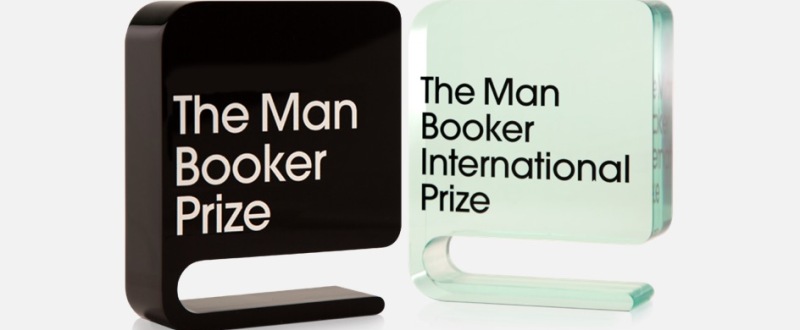
The Booker Prize also found its centre of gravity drifting somewhere into the sea after shifting sponsorship in 2002 to the Man Group, a company founded 235 years ago as a sugar broker (what else) and which, despite still covering 16 percent of cross-border sugar trade in 1997, now describes its business as ‘technology-empowered active investment management focused on delivering performance and client portfolio solutions’. The Financial Times describes it as ‘the world’s largest publicly traded active management group’, and it has significant business in America. (Booker, meanwhile, has been eaten by Tesco for £4bn.) It was perhaps inevitable that the prize would be opened up to American writers, given how little else the sponsors demand of their prize – in fact, it is amazing that they didn’t do it sooner: Martyn Goff was saying back in the mid-eighties that ‘we have always wanted more interest in America’. It is too early to tell whether this rule change will hamper British or Commonwealth authors, but after fifty years we have enough historical biases to be getting on with.

Since 1969, 33 men and 16 women have won the prize – won at literature, in a world where those who don’t win prizes aren’t taken seriously. Jonathan Cape is the publisher with the highest number of winning titles (8), and the most shortlistings (31), all the more impressive if you count Chatto’s 3 wins and 18 shortlistings. By my count, imprints under the Penguin Random House group have won 19 of the previous 49 prizes, and have been shortlisted 103 times. Since 2014, when the prize opened to American writers, two have won the prize; four of the other winners hail from Australia, three from India, three from Canada, two from South Africa, two from New Zealand. If anyone is looking for a trend, a far greater number of authors – Kingsley Amis, Anita Brookner, Nadine Gordimer, Ian McEwan, Kazuo Ishiguro, David Storey, Salman Rushdie – were published by Tom Maschler. The shortlist for 2018 makes it a one-in-three chance that the winner will be American, a one-in-three chance that the winner will be a Cape author, and a one-in-six chance of being a current Jonathan Cape editor.

In the late sixties, there had been two pressing concerns for Jonathan Cape. The first was to avoid falling into close orbit with big business, particularly of the kind that was already taking hold in America. The second was to boost the sales of the high quality writing that Cape itself published by founding a high profile prize. But despite succeeding spectacularly in the latter, they had no way of avoiding the former, for Cape found that those authors on their list who didn’t win The Prize struggled to sell much as they ever had. Now, Jonathan Cape has become the model for a literary list nested in a larger conglomerate, whose first duty is to win the prizes, and the Booker Prize above all. Which, since the values of the prize were first articulated by the director of Jonathan Cape, should not be so very hard to do.


This essay was first published in Issue 3 of the Brixton Review of Books in September 2018. You can subscribe to the next four issues of the Brixton Review of Books for £10.