Pedestrians spill out of Wembley Park station. Lots of men are wearing hoodies and loose fitting jeans, with cropped hair and the occasional scar where hair won’t grow. Blue lights flash past as we converge on Wembley Arena. The UFC, or Ultimate Fighting Championship, has come to town.
The Ultimate Fighting Championship is the best known of the mixed martial arts (MMA) events, which were conceived to answer the old pub dilemma, “Who would have won in a fight between Bruce Lee and Mohammed Ali?” Every martial art claims to be the best fighting style on its own terms, but it had, until MMA, been a matter of dispute as to which might actually win in a no-holds-barred brawl. The answer seems to be a combination of boxing, wrestling, Muay Thai and Brazilian jiu-jitsu.
In the early days of UFC almost anything that might allow a fighter to emerge victorious was permitted. There was no limit to the number of rounds. John McCain, the failed presidential candidate, campaigned against the league in the 1990s, and succeeded in having the event banned in the majority of US states. Las Vegas casino owners the Fertitta brothers then bought the rights to the UFC—the contract included a clause which stipulated that any dispute between the two brothers would be settled in a jiu-jitsu match of three five-minute rounds—and they began the long process of rebranding UFC as a serious sport.
Rounds in the octagonal metal cage are five minutes long. There are eight weight classes. But even in an increasingly regulated spectator sport, only the most extreme strategies are disallowed. The rule book’s brief list of fouls includes “putting a finger into any orifice,” “spiking an opponent to the canvas on his head or neck,” and “attacking an opponent who is under the care of the referee.” It explicitly states that you are not allowed to throw in the towel without the referee’s consent.
Notice, too, that the rules say “his.” There are women fighters, but this is a hyper-male sport. Poor Ernest Hemingway might not have known what to make of our modern world, where fishing must be humane and sustainable, bullfighting may be banned and the US president himself is pushing for gun control—but he would have felt at home with mixed martial arts, which harks back to an ancient masculinity.
My brothers and I find our seats and watch English fighter Tom “Kong” Watson knock Stanislav Nedkov to the floor with his elbows, knees and fists. A spot of blood hits the lens on one of the four close-up cameras trained on Nedkov’s fallen body as a referee throws himself between the victor and his opponent. The crowd cheers heartily.
The heaving arena is lit by the glow of roving spotlights and wrestling-style branding, flashing up the UFC logo on the six giant screens at either end. My two brothers are on my right; to my left are two men in their late thirties, also brothers, and their father, who looks a bit like Steven Berkoff. Behind us, in the rafters, is a group of loud Scousers, who remain standing throughout. Everyone has plastic cups of Becks Vier. Glass would be a bad idea. There are seven preliminary fights tonight, and another five on the main card. Ten thousand people have paid a total of almost £900,000 to be here.
As the song “Move” by Thousand Foot Crutch ends, the next fighters are announced. They have their eyebrows smothered in Vaseline and are let into the octagon. My older brother explains the term “ground and pound” while we watch. It means sitting on or standing over your opponent and hitting him in the face until someone stops you. After the first round, the ring girl, Brittney Palmer, to whom a whole double-page spread in the programme has been dedicated, sashays around the eight sides of the cage. There are wolf whistles and some horrible things are said. One of the four cameramen tracks her as she sits back down. She notices him, smiles, gives a little wave with her fingers and mimes a kiss to the viewer.
I turn to one of the men to my left, just as he says, “I want to see a leg get broken.” I ask him why everyone is crowding round a particular spot on the ground near ringside. “People want a photograph with the Freakshow,” he explains. Down there, among the crowd, is Colin “Freakshow” Fletcher, a British fan favourite, who is not fighting tonight. He is known for taking as many punches as necessary in order to get close enough to strangle his opponent. Seven of his eight wins have been by submission. He is also known for wearing clown makeup, and being accompanied in his entrance by men in gimp masks and on leashes. There are people who think MMA is an ignoble sport. But one might argue that it is not a sport; it is a spectacle.
Terry Etim is coming up next. Along with Fletcher, he is among a new generation of British MMA fighters who have followed in the wake of Michael Bisping, the first Brit to headline a UFC card, way back in UFC 78 (we’re now at 157). Etim is from Liverpool, and the Scousers behind us go wild as he is announced. He has a six-inch height advantage on Renée Forte, and glares straight ahead as he enters to “In the Air Tonight” by Phil Collins. The whole crowd is behind him. Forte comes out, short, less angry looking, and they fight tentatively. Forte works Etim’s left knee; Etim has a quick, high push kick that he keeps trying to land. Etim loses on points, by unanimous decision, and the crowd is despondent. There was no grand victory; there were not even good strikes for the slow-motion replays. In three days’ time, Etim will be released by the UFC. Two of the other UK fighters, Paul Sass and Che Mills, will also be dropped. It is Mills’s first loss, but UFC president Dana White is disappointed by his failure to “drop punches, elbows—go absolutely apeshit” in the last round. The crowd must have their broken legs.
We go out to get more beer. There is a long queue for the men’s toilet and no queue for the women’s.
The next winner, James Te Huna, gives a shout out to his young nephew. I hope the nephew was only allowed to watch his Men in Black pastiche entrance, and not the fight itself, when Te Huna took a roundhouse kick to the neck and was repeatedly elbowed into the canvas, requiring two men with towels to clean up the blood.
After three hours, I have begun to think about each fight much more in terms of strategy, though it’s hard to completely set aside the human cost. The fighting is highly technical—more so than boxing, because of the versatility of the fighters—and like chess games, fights tend to move along established pathways of aggression and counter. Jimi Manuwa attacks four-time Muay Thai world champion Cyrille Diabaté. I watch Manuwa try to take Diabaté down to the ground and away from his comfort zone, Diabaté keeping him at bay with quick knees to the body in clinch. At the end of the first round, the referee calls the doctor over to Diabaté’s corner. His leg won’t support him. The fight is called off and the crowd have their broken leg. They boo. Diabaté is helped off and they clap him out. It is not the fighter they object to, since he isn’t allowed to throw in the towel himself; it is the meddling bureaucrat who has called off the fight because of a mere torn calf.
Cub Swanson and Dustin Poirier are up next for the penultimate fight. They look like Orlando Bloom and Elijah Wood respectively, if each actor had shaved his head, covered his upper body in tattoos and started a prison gang. Swanson has a neat line shaved, or scarred, into his right eyebrow. Poirier has one cauliflower ear.
My little brother leans in to talk in my ear. “He looks like a total psycho.”
I don’t know which of the two he means.
Poirier starts scrappy, and Swanson quickly goes for a roundhouse and misses with an uppercut. Swanson seems the more brutal, I think, as he tries to land a flying knee. He was the one screaming, open mouthed, when his name was announced. Swanson kicks again but Poirier has seen it coming and tips up his foot, temporarily downing Swanson, who wrenches his leg free before it can be used in a big takedown. In the second round they box pretty solidly, though Swanson is still trying for more audacious, heavy hits. Swanson is certainly more in control in the second half: he executes a textbook takedown and then, having pinned Poirier to the floor, he grins up at the nearest camera and lifts a hand to his ear to urge on the crowd’s roars. Swanson understands that fighting is only half of his job. He wins by unanimous decision.
The music starts up again: “watching the people get lairy…” After this brief incitement to riot, we are played a teaser video for the title fight. It is the Interim Bantamweight Championship, with favourite Renan Barao fighting Michael McDonald. Both are shown knocking people unconscious in inventive ways, or battering the head of an already unconscious opponent.
McDonald enters to a dulcet song. It’s like a nursery rhyme in a horror film. Barao enters with a brightly glowing gum shield. The stats on the big screen say that Barao has a winning streak of 30 fights. From the start of round one, time seems to speed up. Barao attempts an early spinning back kick but he is out of reach. McDonald surges at him with a flurry of punches. He lands two left hooks and takes Barao to ground. Soon they are up again. It feels as if any second could be the last of the fight.
In the second round, they wear each other down, testing boundaries. Barao bunches his shoulders; McDonald stays lively, bouncing on the balls of his feet. Both are bleeding on their face; McDonald also on his left shoulder. In the third round, out of nowhere, Barao lands a spinning back kick straight in the chest. McDonald stumbles back but, incredibly, keeps fighting.
“At least it wasn’t in the face,” says my younger brother.
We watch the slow-motion replay, and it was in the face. The kick caught McDonald on the chin, a blow that should have knocked his jaw off, but he stayed on his feet, and he’s still in for round four. Barao takes him down and he manages to get back up again, but Barao brings him back down to ground, one knee on his stomach, his right arm and throat caught in a tight arm-triangle choke hold. Seconds pass. The referee asks for a sign that he’s conscious and McDonald gives the thumbs up. He’s weakening, gradually. More seconds pass. He taps out.
The crowd suddenly erupts as Barao jumps up and begins to dance. The interviewer tries not to laugh as he asks questions to an interpreter, who translates the question into Portuguese, receives Barao’s answer and translates it back to English. Blood and choking is a good end to the night.
After just six hours and 12 fights, my brothers and I are back out on the streets of Wembley. Tom Watson receives two £33,000 bonuses for best knockout and best fight, worth multiples of his normal pay. It is a codified sport, but you can only hit the real money if you entertain, and you might lose your place in the roster if you don’t. As Barao said in the pre-fight interview: “I will put on a good show once again.”

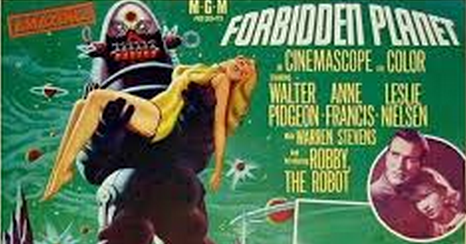
 In changing some of the fundamental rules of the fictional world, filmmakers had to take some things for granted—you can’t be radical about everything at once—and one of the genre’s historical failings, discussed without much depth by the authors, was its presentation of women as sex objects. In SF musical caper Just Imagine, Mars looks much like a tropical hotel lobby full of scantily clad show girls who try to undress the heroes; far more pleasant than their Earth, where by their own admission they “hate these modern women.” In Forbidden Planet, the main female character Alta serves no purpose beyond providing a focus for sexual desire. At one point the Captain chides her outright for her short skirt, which is likely to provoke a sexual assault from one of his randy crew, if he doesn’t get there first (he does). Later, in Logan’s Run, the eponymous character is utterly baffled when, wearing a sleazy kimono, he materialises a woman in his flat, says “let’s have sex,” and is refused (don’t worry, she does end up having sex with him, and also getting spontaneously nude in an ice cave). After decades of SF films pandering to male fantasy, I was pleased to see the authors note the appearance of Princess Leia in 1977 with thoughts and actions all of her own, though they see her relative lack of sexualisation as being “repressed: a breach with tradition in the genre… Star Wars was scant female liberation.” I’d say it’s worth considering what came before.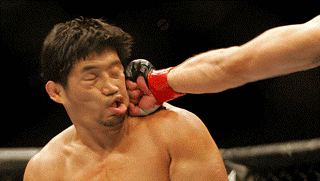
 Alex Christofi